News
Google Search Console update introduces social and video reporting
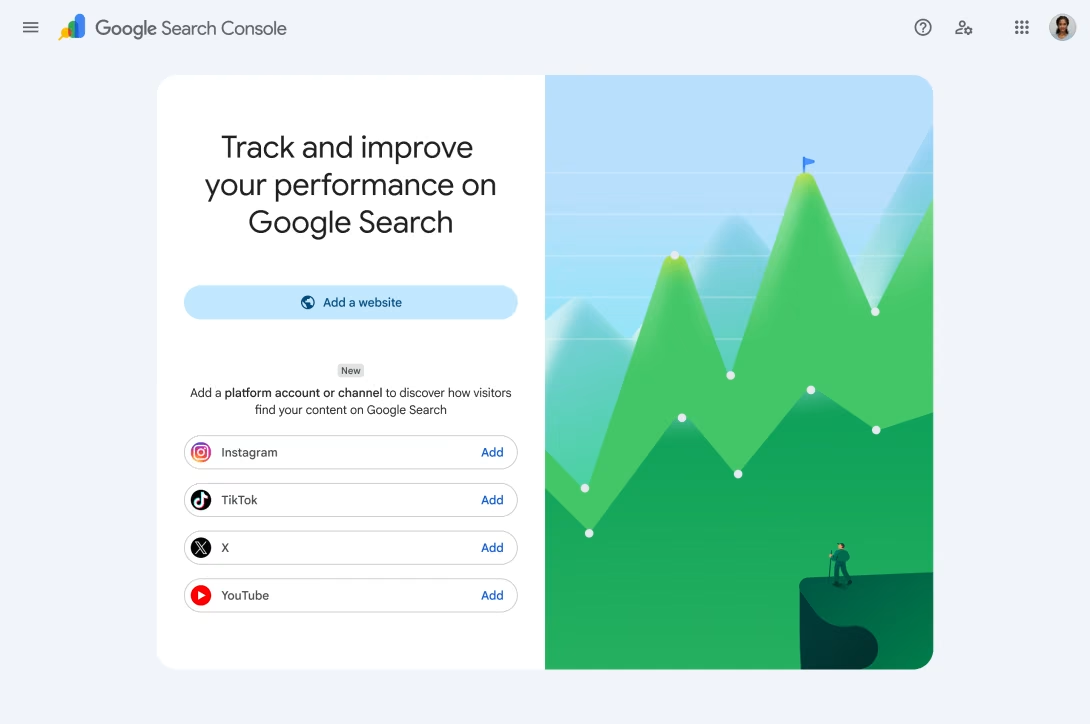
Google Search Console has introduced platform properties, allowing brands and creators to track how content from Instagram, TikTok, X and YouTube performs in Google Search, with Discover and Google News reporting available where eligible. Here's everything you need to know about the new feature, what it reports and how to get started.
Google Search Console has introduced a new property type called Platform Properties, allowing creators, publishers and brands to monitor how content published on Instagram, TikTok, X and YouTube performs in Google Search, with reporting from Discover and Google News available where eligible.
Search Console (launched in 2005 as Google Sitemaps and rebranded from Google Webmaster Tools in 2015) has long been one of the most valuable tools for website owners and SEO professionals, giving insight into organic search performance, indexing status and technical SEO issues.
Until now, there was no reliable way to measure how Google surfaced content published on major social platforms alongside traditional website content.
As Google continues to surface more creator content, videos and social posts in its search results, platform properties give brands a way to understand how that content contributes to their overall search visibility.
[Image Source: Google Search Central]
Why Google has introduced platform properties
Google has introduced platform properties to give creators, publishers and brands a clearer view of how their social content is discovered through Google Search.
Google increasingly supports a wider range of creator content formats within Search, including videos and posts from supported social platforms. Marketers therefore need better visibility into how this content performs beyond native platform analytics.
Rather than replacing social media analytics, platform properties complement them by showing how content performs specifically within Google's products. This gives creators, publishers and marketers another source of Google Search performance data, which they can use to measure how effective their content strategy is.
What do the new Google Search Console platform property reports include?
Platform properties focus on reporting performance and traffic insights.
Each property comes with three types of reporting, with key metrics including:
Performance report
- The Performance report provides total clicks, impressions, average click-through rate (CTR) and average position for your connected platform.
- You can filter the data to identify which posts and search queries generate the most visibility across Google Search, Discover and Google News, and export it for reporting.
Insights report
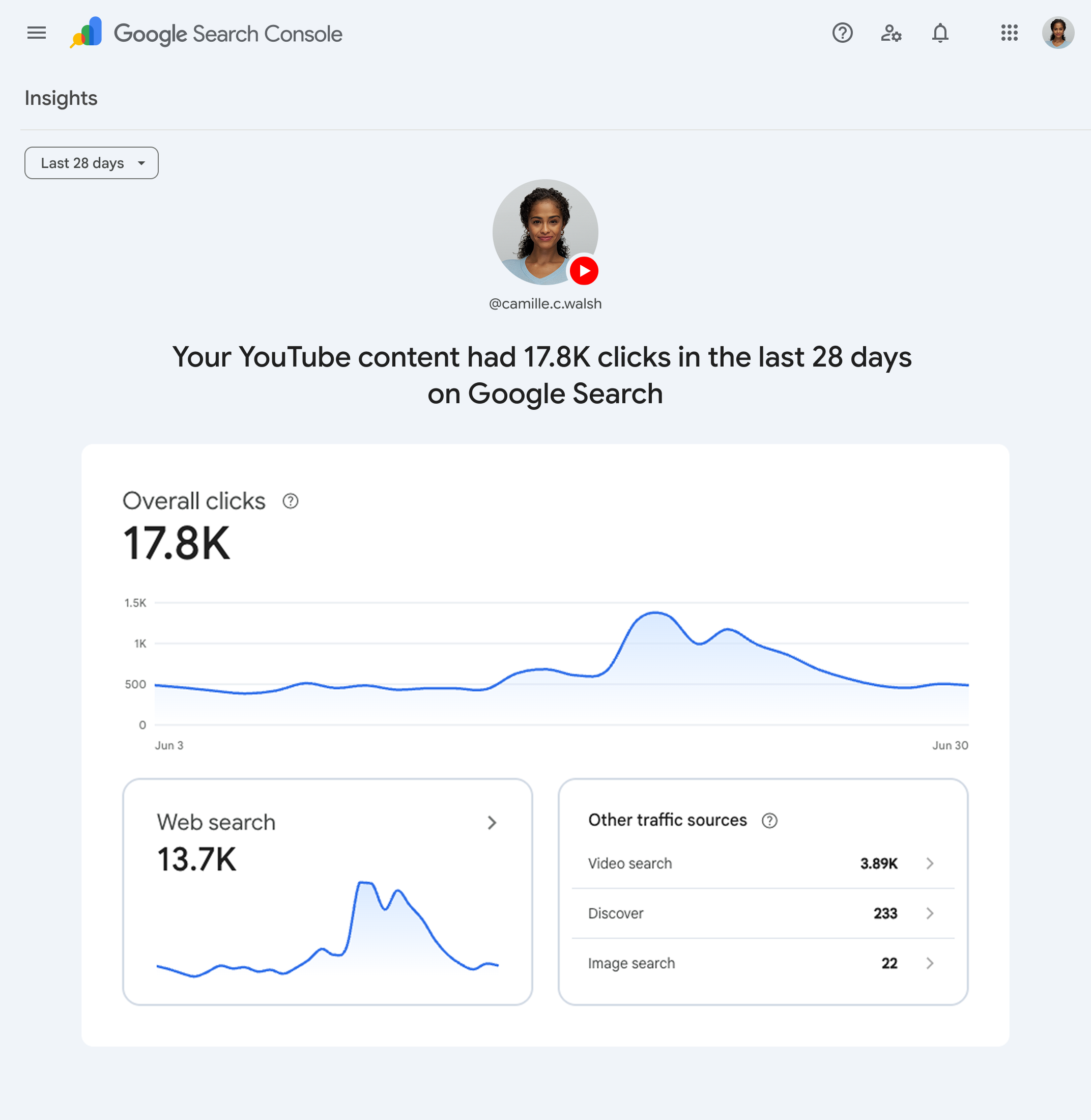
- The Insights report offers a high-level overview of recent performance trends, highlighting your most successful content and the topics attracting visitors from Google's surfaces.
- This makes it easier to spot emerging trends without manually analysing individual posts.
Achievements
- Achievements introduce milestone tracking within Search Console, recognising performance improvements such as reaching new click thresholds over a rolling 28-day period.
- Although primarily motivational, the feature can also help teams demonstrate long-term growth.
One of the biggest benefits is seeing exactly which Google search queries surface your Instagram posts, TikTok videos, YouTube content or X posts, giving marketers a much clearer understanding of the topics Google associates with their content and where opportunities exist to improve visibility.
[Image Source: Google Search Central]
How to set up social media property types in Search Console
We recommend setting up platform properties for every social channel you actively use. This allows you to understand how users discover your content through Google.
Platform properties deliver insights into content performance and traffic patterns for every property you add. They don't replace native analytics and only measure how your content performs within Google's own products. Engagement metrics such as likes, shares, comments, video watch time and follower growth remain available only within each social platform.
You will need to set up an individual property for each social media platform you wish to track. Instagram, TikTok, X and YouTube content all require individual properties.
Here's how to set up the new social media property types in Google Search Console:
- Open Search Console.
- Go to the Search Console verification page, or open the property selector drop-down in Search Console and click “Add property”.
- Select Instagram, TikTok, X or YouTube from the list.
- Follow the verification steps to authorise the connection.
- Once verification is complete, click “Go to property” to finish the setup.
Google states that it can take a few days for data to appear in the reports. If you oversee several brands or social profiles, you'll need to verify each platform property separately before its reporting becomes accessible.
Social media analytics report on key metrics such as impressions, clicks and engagements your content generates within the platform. Platform properties offer insight into how your content performs on Google Search.
Why platform properties matter for marketers
Social platforms are becoming search engines in their own right. People increasingly use Instagram, TikTok and YouTube to find products, recommendations and tutorials before making a purchase.
Google is also showing more social content within Search results. Understanding how that content performs gives marketers another valuable source of insight when planning SEO and social campaigns.
The feature complements platform analytics rather than replacing them. For businesses investing in SEO and social media, it provides a way to measure content performance in Search.
“SEO and social media are becoming increasingly connected. Businesses shouldn't treat them as separate marketing channels anymore. The brands that perform best create content that works across search, social and AI-driven discovery. Platform properties provide another useful source of data to measure that performance.”
Sam Porter, Senior Search Manager, Red C Marketing
Platform properties versus Search profiles
It's easy to confuse platform properties with Search profiles, the public profile pages Google introduced for qualified creators and publishers in June 2026. Search profiles are a public-facing shareable page that pulls a creator's content together for their followers. Platform properties are the opposite: a private, analytics-only view of how your posts perform in Google Search. If you're looking for reporting rather than a public presence, platform properties are the one you want.
What you should do now
Google has confirmed that platform properties are rolling out gradually, so the option may not appear in your account immediately.
Once it's available, connect your social platforms and start identifying which content gains visibility across Google Search, Discover and News. As Google continues to connect search, social media and AI-powered discovery, measuring performance across every channel is becoming increasingly important.
If you'd like help turning that data into practical action, our specialists at Red C support clients with SEO and paid social, and can build platform property reporting into your existing measurement setup.